


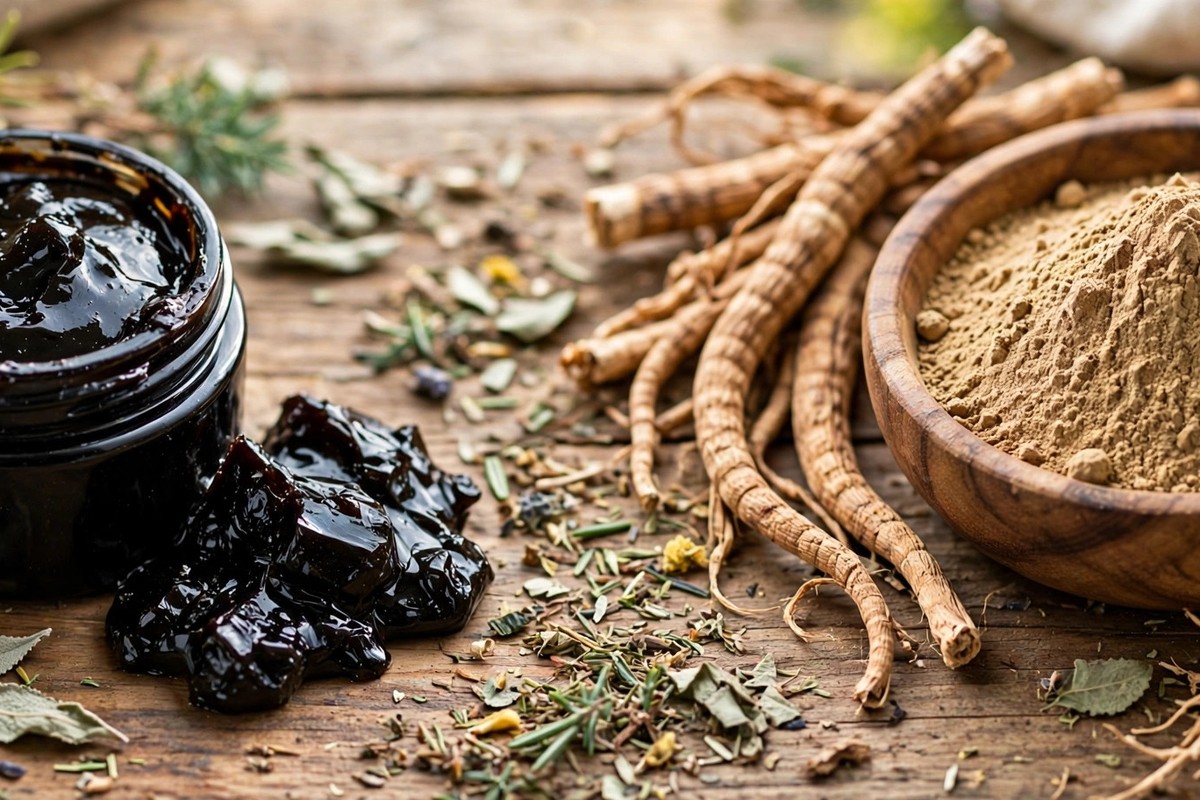
Two traditional wellness ingredients are often mentioned in the same breath, and many people wonder whether to choose one, the other, or neither. The question of shilajit vs ashwagandha comes up often, because both are used in daily wellness routines, yet they come from very different sources and are used in different ways. This guide compares them in general terms only, so you can think about which one fits your routine.
What Is Shilajit?
Shilajit is a mineral-rich substance traditionally collected from high mountain regions, including the Himalayas, and is commonly available as resin, capsules, powder or liquid drops. In a shilajit vs ashwagandha comparison, shilajit is usually described by its form and source: a dark, sticky resin that can be dissolved in warm water, or a convenient capsule or drop for a simple daily routine. K2 Himalayan Shilajit offers pure Himalayan shilajit in several forms, so the choice is often about which format feels easiest to use. For a broader overview, see Shilajit Benefits: Energy, Focus and Recovery, and explore the Pure Shilajit Resin or Shilajit Capsules to compare formats.
What Is Ashwagandha?
Ashwagandha is a plant traditionally used in Ayurvedic wellness routines, most often from its root, and is commonly sold as a powder or in capsules. It is usually taken as part of a regular daily routine, mixed into a drink or swallowed as a capsule, depending on the product and the label instructions. Unlike shilajit, which is mineral in origin, ashwagandha is a botanical ingredient, so its taste, texture and preparation are quite different. When people ask about shilajit or ashwagandha, they are often really asking which type of product feels more natural to include in their day, rather than which one is universally better.
Key Differences at a Glance
At a glance, shilajit vs ashwagandha is less about one ingredient beating the other and more about source, form and routine. Shilajit comes from mountain mineral matter and is often used as resin dissolved in warm water, while ashwagandha comes from a plant root and is often used as powder or capsules. Their routines also differ: resin needs a little preparation and a clean spoon, whereas capsules can be taken quickly with water. Taste is another difference, since resin has a strong, earthy character, while ashwagandha powder can also be earthy and is often blended into a drink.
Which One Fits Your Routine?
So, shilajit vs ashwagandha, which one fits your routine? Think first about how you like to take a supplement. If you enjoy a small morning ritual, such as dissolving resin in warm water, shilajit resin may suit you. If you prefer speed and simplicity, capsules may suit you better, whichever ingredient you choose. Think also about taste: some people enjoy mixing a powder into a smoothie, while others prefer a capsule or a ready-made drop. A useful question is not only ashwagandha vs shilajit in general, but which product you are most likely to use consistently, because a daily wellness routine works best when it is easy to keep up.
Can You Take Both?
Some people ask whether they can take both ingredients together. The honest answer is that only a doctor can advise you, based on your health, your other supplements and any medication you take. This guide does not give medical advice, and it does not recommend combining products. If you are considering more than one supplement, speak to your doctor first, share the full label details, and follow their guidance. Finally, shilajit vs ashwagandha is not a contest to win; it is a personal choice about source, form and routine, made with good information and professional advice where needed. Ready to explore the shilajit range? Browse the full K2 range.
This product is not intended to diagnose, treat, cure or prevent any disease. Consult your doctor before use if pregnant, nursing or taking medication.